

Find Hope and Support for CRPS at Thrive Physical Therapy
Complex regional pain syndrome (CRPS) can make everyday life feel unpredictable. Pain may seem out of proportion to the original injury, your limb may look or feel different, and simple tasks can suddenly feel exhausting or impossible. At Thrive Physical Therapy, we understand how confusing and frustrating this condition can be. Our physical therapist provides compassionate, evidence-based CRPS care in Olathe, KS, focusing on gentle, progressive treatment that helps you move with more confidence and regain control of your daily activities.
What Is Complex Regional Pain Syndrome (CRPS)?
Complex regional pain syndrome is a chronic pain condition that most often affects an arm, leg, hand, or foot after an injury, surgery, or period of immobilization. With CRPS, the nervous system reacts in an exaggerated way, so pain signals stay “turned up” even after the tissues have healed.
People with CRPS often describe burning, throbbing, or deep aching pain. The affected area may also look or feel different than the other side of the body. This is not a sign of weakness or “just in your head.” It is a real condition related to how the nerves, blood vessels, skin, muscles, and brain are communicating.
At Thrive Physical Therapy, our goal is to help you understand what is happening in your body and give you a clear, step-by-step plan to improve comfort, function, and independence.
Common Signs and Symptoms of CRPS
CRPS can look different from person to person, but some common symptoms include:
- Persistent pain in an arm, leg, hand, or foot that feels more intense than expected
- Burning, throbbing, or sharp pain that may spread beyond the original injury area
- Swelling or puffiness in the affected limb
- Skin color changes (red, pale, bluish) or shiny, thin-looking skin
- Temperature changes, where the limb feels warmer or cooler than the other side
- Changes in sweating in the affected area
- Increased sensitivity to touch, clothing, or temperature (even light contact may feel very painful)
- Stiffness, weakness, or difficulty moving the limb
- Changes in nail or hair growth around the painful area
Symptoms may flare up and calm down at different times. Without the right support, people can become afraid to move the limb, which can make stiffness, weakness, and pain worse over time.
How Physical Therapy Helps People with CRPS
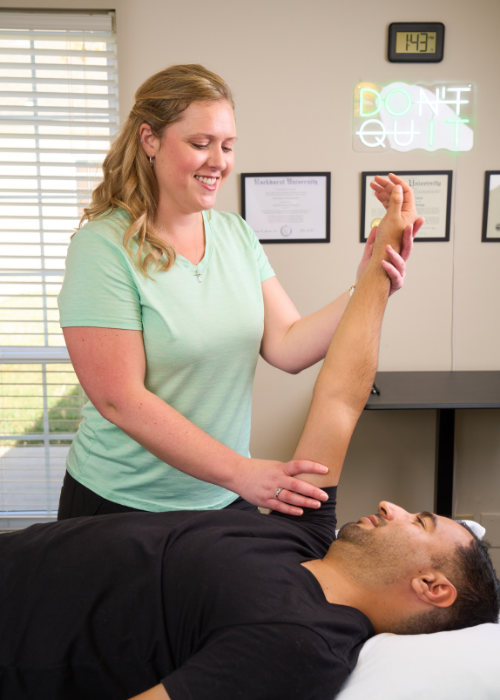
Gentle, well-planned movement is one of the most important tools for CRPS. Avoiding all movement can lead to more stiffness, weakness, and sensitivity, but pushing too hard can also flare symptoms. Physical therapy helps you find the safe, middle ground. Dr. Chelsea understands that some pain is “too hot to handle” and needs a hands off approach to get started. There are many treatments that can be used without requiring any touch and very little movement to calm down the nervous system to feel safe enough to progress.
At Thrive Physical Therapy, our physical therapist in Olathe, KS uses a combination of:
- Graded movement and loading – Very small, controlled movements that gradually progress in range, speed, and effort so your nervous system can adapt without being overwhelmed.
- Desensitization techniques – Gentle touch, textures, and movements are introduced in a controlled way to help your brain and nerves become less reactive to normal sensations.
- Pain neuroscience education – Clear explanations of how pain works and why CRPS behaves the way it does. Understanding that pain does not always equal damage can reduce fear and help you move more confidently.
- Manual therapy as tolerated – Soft tissue and joint techniques, used carefully and within your comfort level, to improve mobility, reduce stiffness, and support more natural movement.
- Functional training – Practice of real-life tasks such as reaching, grasping, walking, or weight-bearing, so improvements in the clinic carry over into your daily routines.
We work closely with your referring provider and other members of your healthcare team. Physical therapy often complements medical treatments such as medications or injections, giving you a more complete plan of care.
Your CRPS Treatment Plan at Thrive Physical Therapy
No two CRPS cases are exactly alike, so your care at Thrive Physical Therapy begins with a thorough evaluation. During your first visit, your therapist will:
- Review your medical history, past tests, and treatments
- Ask about your pain, flares, and how CRPS affects your daily activities
- Examine your posture, movement, strength, flexibility, and sensitivity
- Look for factors that may be contributing to ongoing pain, such as guarding, fear of movement, or limited use of the limb
From there, we will create a plan tailored to your needs and goals. Your CRPS treatment plan may include:
- Gentle range-of-motion and mobility work to keep joints moving and prevent stiffness
- Progressive strengthening to restore support around the affected area without triggering large flares
- Desensitization and sensory retraining to help your nerves respond more normally to touch and movement
- Balance and coordination exercises if CRPS affects how you stand, walk, or use the limb in everyday tasks
- Graded aerobic activity to support overall health, circulation, and nervous system regulation
- Education on pacing and flare management so you can recognize early warning signs and adjust your activities before symptoms spike
Why Does CRPS Happen?
The exact cause of CRPS is not fully understood, but most experts agree that it involves:
- A heightened response of the nerves in the affected limb
- Changes in how the spinal cord and brain process pain and movement
- Possible effects on blood vessels, skin, and immune responses
Often CRPS begins after:
- A fracture or sprain
- Surgery
- A crush injury or direct blow
- A period in a cast or brace with little movement
Not everyone who has an injury develops CRPS, which can make it feel confusing or unfair. What matters most now is having a team that listens, believes your symptoms, and helps you move forward with a clear plan. At Thrive Physical Therapy, we take the time to hear your full story and explain your options in simple, practical terms.
We will move at a pace that respects your comfort, but we will also encourage steady progress so you can see tangible changes over time. Your feedback guides every session.
Take the Next Step Toward Better Control of CRPS
Living with complex regional pain syndrome can feel isolating, but you do not have to handle it alone. With the right combination of education, movement, and support, many people see meaningful improvements in function, comfort, and confidence.
If you are struggling with CRPS or think you might have it, the team at Thrive Physical Therapy in Olathe, KS is ready to help. Contact us today to schedule an evaluation and start a personalized plan that focuses on your goals, your pace, and your everyday life.
Together, we will work to reduce the impact of CRPS and help you return to the activities that matter most to you.
Your Next Steps…
- Request An Appointment
- Receive A Custom Treatment Plan
- Work Hard and Progress In Your Recovery
- Recover & Enjoy Life Pain-Free